
Frequently Asked Questions
What types of posts are compatible with FootingPad?
FootingPad can be used with most post types such as treated wood posts and laminated columns, pre-cast and poured concrete columns, and jack posts.
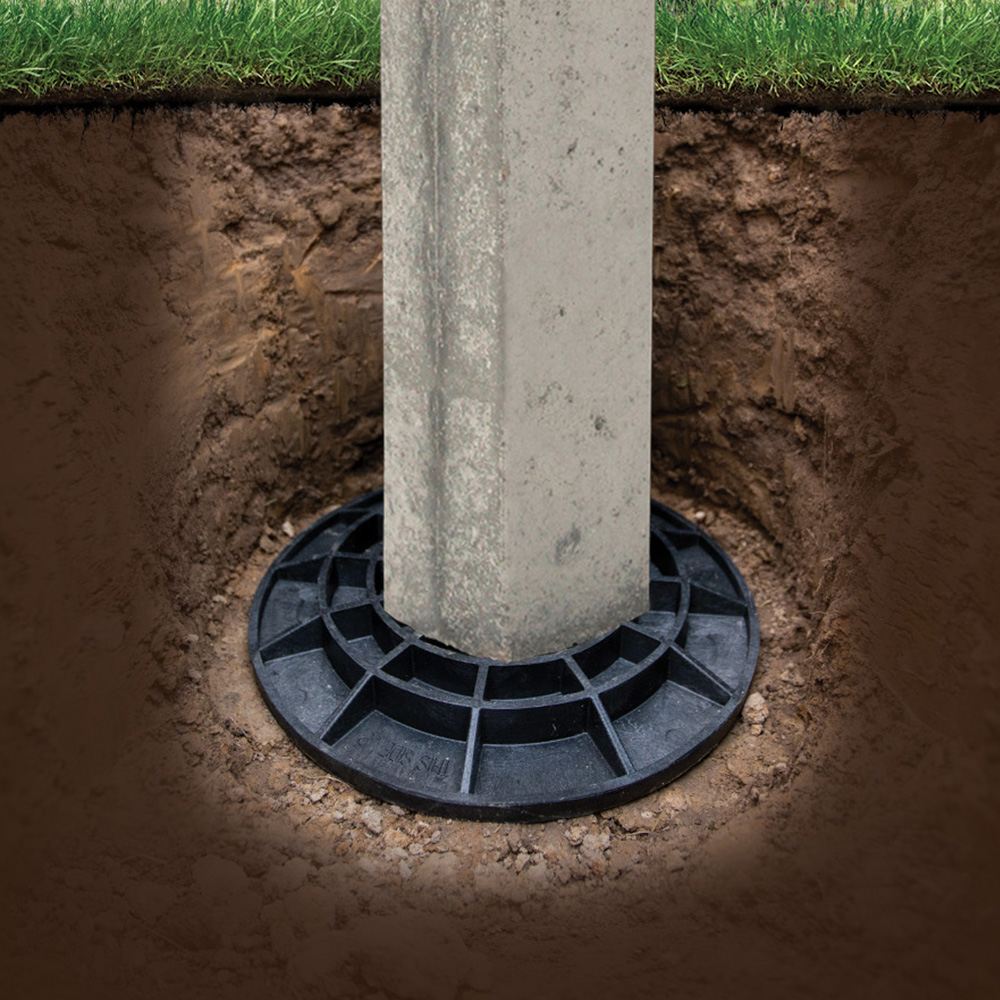
FootingPad shown with Perma-Column post.
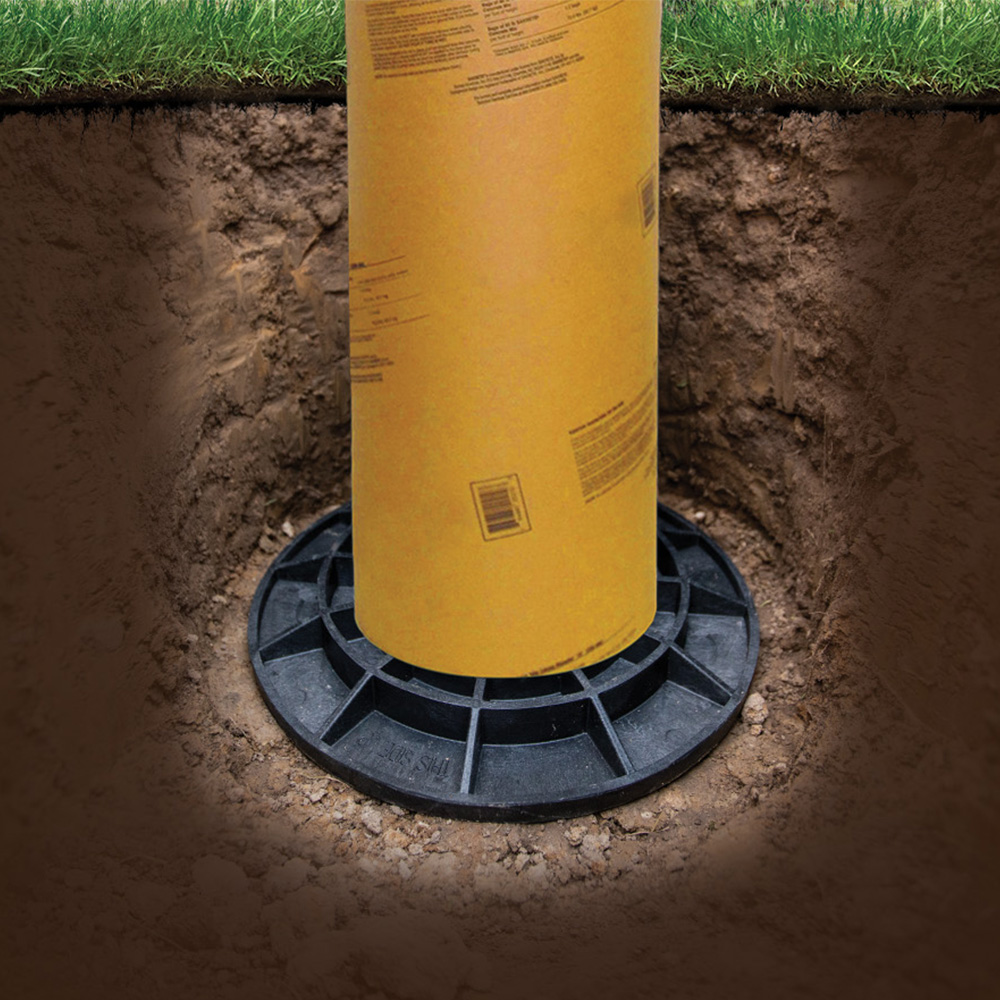
FootingPad shown with concrete form.
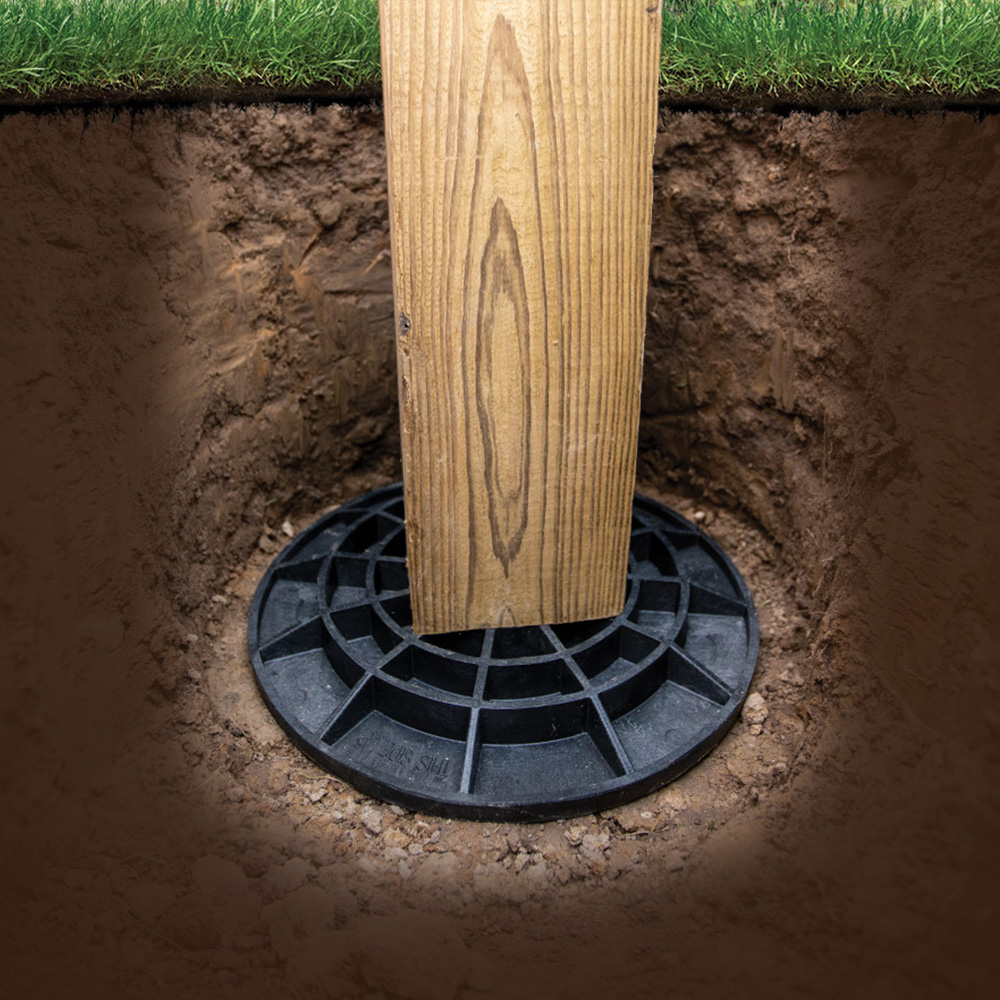
FootingPad shown with wooden post.
Can FootingPad be used in place of concrete footings?
Yes. FootingPad® structural post foundations are engineered to meet or exceed the load capacity of concrete, while being lightweight and easy to handle. FootingPad can be used in place of a concrete footing of equal diameter.
Are FootingPad Post Foundations Building Code Compliant?
Yes. FootingPad brand post foundations have been independently tested, and certified by ICC-ES as a code-compliant alternative to concrete footings. With a fifteen-year track record, lifetime guarantee, and nearly 1,000,000 in the ground, FootingPad is trusted by contractors and code officials throughout the United States.
It is possible that your building inspector may not be familiar with FootingPad post foundations. However, inspectors are familiar with and accept ICC-ES Evaluation Reports to document code compliance. Please print a hard copy of the ICC-ES Evaluation Report 2147 and provide it to your inspector.
Learn more about FootingPad’s building code compliance.
What material is used to make FootingPad post foundations?
FootingPad footings are engineered using a specially formulated, fiber-reinforced composite that is lightweight while providing exceptional strength. They dramatically lower energy used in manufacturing versus concrete. There is no scrap in the process like concrete and less fuel is used for transportation compared with 80-pound bags of concrete per post hole.
What types of structures can be built on FootingPad footings?
FootingPad® can be used as a support footing for most post-supported structures, including decks, gazebos, porches, and post-frame buildings (pole barns). They can be used for any Type V construction under the IBC or any construction under the IRC. FootingPad post foundations can also be used for fences, as well as basement and crawl space jack posts.
Can I use FootingPad in a basement or crawl space?
Absolutely! FootingPad is ICC building code compliant and works with most post types, including jack posts, so it’s a perfect solution for basement applications. Its thin and lightweight profile is ideal for working in tight crawl spaces and eliminates the need to use back-breaking concrete.
What size footing do I need?
See our FootingPad Sizing Chart and Simple Sizing Formula to determine the correct size for your application, or use our helpful Sizing Calculator.
What is the minimum post size required?
10″ and 12″ FootingPad footings require at least a 4×4 post (3.5″ x 3.5″) and our 16″, 20″, and 24″ footings require a minimum 6×6 post (4.5″x 5.5″). In certain applications using the minimum size post is not feasible, a smaller post can be placed on a piece of 1/4″ plate steel that meets or exceeds the minimum post size requirement. See our FootingPad Sizing Chart.
How do I install FootingPad?
FootingPad post foundations are easy to install in six simple steps. Watch our video: How to Install FootingPad Footings.
Are FootingPad footings made in the U.S.?
Yes, all FootingPad products are proudly manufactured in the United States.
Does FootingPad have a warranty?
Yes, FootingPad provides a Limited Lifetime Warranty.
Where can I buy FootingPad?
FootingPad is available through most lumber and building material retailers as well as on FootingPad.com. Locate a dealer near you.
Will wood posts rot?
Both air and water are required for wood to rot. The air level in soil is quickly depleted the deeper you go below grade and becomes insufficient for significant decay at the depth at which most footings are placed. A completely waterlogged post is also not prone to decay. Studies have shown that treated lumber that is certified for ground-contact will last for 30-50 years.
What type of wood posts should I use?
There are different types of treated lumber. For in-ground wood posts, it is important to use treated lumber that is rated for ground contact.
Is there a need for water drainage when using FootingPad?
Water does not pool below ground after your posthole has been backfilled, so FootingPad footings do not require any type of drainage.
How do I add uplift resistance?
Uplift is a term used to describe the force that works to pull a post out of the ground. This is typically associated with wind forces acting on the underside of a structure, such as a pole barn roof or the surface of a deck. Learn how to use metal cleats or 2×4 lumber to add uplift resistance.
Can I use FootingPad for fence posts?
Yes, FootingPad is a great solution for fence post foundations on projects that have soil conditions that would otherwise be unable to provide adequate support for the weight of the fence.